If you run an engine repair shop, you know that the “heart” of any engine is the crankshaft. Over time, friction and heat cause the crankshaft to wear down, lose its smooth surface, or become slightly bent. To fix this, you need a high-quality Crankshaft Grinding Machine. Choosing the right machine is the difference between an engine that runs like new and one that fails within a week.
In a busy workshop, productivity depends on how fast and accurately you can work. A reliable Crankshaft Grinding Machine ensures that you can restore engine parts to their original factory specifications. Investing in the right equipment reduces manual errors, saves time, and helps you build a reputation for excellence in engine rebuilding. Whether you are a small garage owner or a large industrial engineer, understanding the technical details of these machines is the first step toward a successful business.
What Is a Crankshaft Grinding Machine?
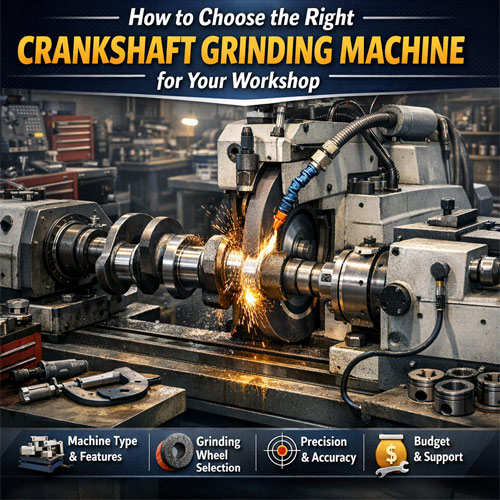
In simple terms, a Crankshaft Grinding Machine is a large, high-precision industrial tool used to resurface the “journals” (the round parts) of a crankshaft. Think of it like a giant, very smart pencil sharpener, but instead of wood, it works with heavy-duty steel. It uses a spinning grinding wheel to remove tiny amounts of metal until the surface is perfectly round and smooth.
Here is what the machine actually does:
- Resurfacing: It removes scratches, “burnt” spots, and uneven wear from the crankshaft.
- Sizing: It reduces the diameter of the journals to a specific “undersize” so that new bearings can fit perfectly.
- Straightening: It helps correct minor misalignments in the shaft’s rotation.
- Polishing: It creates a mirror-like finish that allows oil to flow smoothly, preventing engine friction.
Why Workshops Need a Crankshaft Grinding Machine
If you are involved in engine rebuilding, you cannot rely on sandpaper or hand tools. A Crankshaft Grinding Machine for Workshop use is essential because it handles the heavy lifting of engine restoration.
- Repairing Worn Crankshafts: Instead of throwing away an expensive engine part, you can grind it down and reuse it. This saves your customers money and increases your profit margins.
- Restoring Engine Performance: A perfectly ground crankshaft reduces vibration. This means the engine runs quieter, lasts longer, and produces more power.
- Improving Precision Machining: Modern engines have very tight tolerances. A Precision Crankshaft Grinding Machine can cut metal within microns (thinner than a human hair), ensuring a perfect fit with engine bearings.
- Versatility: These machines can handle everything from small motorcycle cranks to massive diesel truck crankshafts, depending on the machine size.
Important Features of a Crankshaft Grinding Machine
When you start looking at machines from a Crankshaft Grinding Machine Manufacturer, don’t just look at the price tag. You need to look at the “bones” of the machine. Here are the features that matter most:
Grinding Wheel Size
Machine Bed Strength
Spindle Accuracy
Motor Power
Automation Features
Cooling System
Main Parts of a Crankshaft Grinding Machine
Understanding Crankshaft Grinding Machine Parts is vital for maintenance and operation. If one part fails, the whole job can be ruined.
| Part | Function |
|---|---|
| Grinding Wheel | The abrasive disc that actually cuts and smooths the metal surface. |
| Headstock | The powered end of the machine that rotates the crankshaft at a steady speed. |
| Tailstock | The adjustable end that supports the other side of the crankshaft to keep it level. |
| Crankshaft Support (Steady Rest) | A middle support tool that prevents long crankshafts from sagging or vibrating during the grind. |
| Control Panel | The “brain” where the operator sets the speeds, feeds, and emergency stops. |
| Coolant System | A tank and nozzle that sprays liquid to wash away metal chips and keep the part cool. |
| Workhead Chucks | Clamps that hold the ends of the crankshaft securely so it doesn’t slip. |
Factors to Consider When Choosing a Crankshaft Grinding Machine
Buying a machine is a big investment. Before you sign a contract with a Crankshaft Grinding Machine Manufacturer in India or anywhere else, ask yourself these questions:
- Machine Size Compatibility: What is the longest crankshaft you plan to fix? Make sure the “distance between centers” on the machine is long enough for your biggest jobs.
- Precision and Tolerance Level: Does the machine meet the strict standards of modern car brands? You want a machine that can hold a tolerance of $0.005mm$ or better.
- Production Capacity: Are you fixing one crankshaft a day or ten? If you have high volume, you need a faster, more automated machine.
- Ease of Operation: Is the machine easy to set up? A machine that takes two hours to “set up” for a ten-minute job will lose you money.
Maintenance Requirements: Check if the parts are easy to reach. A machine that is hard to clean or oil will break down much faster.
Crankshaft Grinding Machine Applications in Industries
While we usually think of cars, Crankshaft Grinding Machine Applications span across many different sectors:
- Automotive Engine Repair: The most common use. Fixing cars, SUVs, and light trucks.
- Heavy Equipment Maintenance: Repairing huge engines for bulldozers, cranes, and tractors used in construction.
- Marine Engine Repair: Large ships have massive crankshafts that need specialized, heavy-duty grinding machines to keep them at sea.
- Industrial Machinery Workshops: Many factory machines use crank-style shafts to move parts. These need periodic resurfacing to stay efficient.
- Power Generation: Large diesel generators used in hospitals or data centers require precision grinding to ensure they never fail during an outage.
Manual vs CNC Crankshaft Grinding Machine
There are two main types of machines on the market. Choosing between them depends on your budget and your skill level.
| Machine Type | Accuracy | Speed | Best Use |
|---|---|---|---|
| Manual Machine | High (Depends on operator skill) | Slower | Small repair shops, classic car restoration. |
| CNC Machine | Extremely High (Computer controlled) | Very Fast | High-volume factories, high-performance racing shops. |
- Manual Crankshaft Grinding Machine: Great for beginners and shops that handle a variety of different, unique engines. It requires a skilled mechanic to operate the handles.
- CNC Crankshaft Grinding Machine: The computer does the work. It is perfect if you are doing the same type of engine over and over again with perfect repetition
Benefits of Using a Crankshaft Grinding Machine
Why spend the money on this machine? Here are the three main benefits:
Restoring Engine Life
Improving Engine Performance
Reducing Replacement Costs
Common Mistakes When Buying a Crankshaft Grinding Machine
Many workshop owners make these errors when purchasing their first machine:
- Buying Too Small: They buy a machine for car cranks but then get a contract for truck cranks and find the machine can’t fit the part.
- Ignoring the Cooling System: Many people overlook the coolant pump. Without a good one, you will “burn” the metal, making the crankshaft brittle and dangerous.
- Choosing Price Over Quality: A cheap machine with a flexible frame will never grind straight. It is better to buy a used high-quality machine than a brand-new “flimsy” one.
- Forgetting Training: These machines are dangerous if used incorrectly. Ensure you or your staff get proper training from the manufacturer.
Tips to Choose a Reliable Crankshaft Grinding Machine Manufacturer
Finding the right Crankshaft Grinding Machine Manufacturer is just as important as the machine itself. Look for these signs of a good partner:
- Technical Support: Will they help you over the phone or send a technician if the machine stops working?
- Spare Parts Availability: If a belt snaps or a bearing wears out, can you get a replacement in 24 hours?
- Industry Experience: Look for a manufacturer that has been in business for at least 10–20 years.
- Machine Durability: Ask for references. Talk to other workshop owners who use their machines to see if they hold their accuracy over time.
Maintenance Tips for Crankshaft Grinding Machines
To keep your machine running for 20+ years, follow these simple rules:
- Daily Cleaning: Metal “sludge” from grinding can harden like concrete. Wipe down the ways (the tracks the machine moves on) every single day.
- Check Oil Levels: Ensure the spindle and moving parts are always lubricated. Metal-on-metal contact will ruin the machine’s precision.
- Dress the Wheel: Use a diamond dresser to keep the grinding wheel sharp and flat. A “clogged” wheel will overheat the crankshaft.
Leveling: Periodically check that the machine is perfectly level on the floor. If the floor settles, the machine bed can twist, ruining your accuracy.
Key Specifications of a Crankshaft Grinding Machine
| Specification | Typical Range | Importance |
|---|---|---|
| Grinding Wheel Diameter | 600mm to 900mm | Larger wheels provide more stability and longer life. |
| Machine Power | 3.5 kW to 7.5 kW | Higher power is needed for heavy-duty diesel crankshafts. |
| Grinding Accuracy | 0.002mm to 0.01mm | Vital for meeting modern engine bearing tolerances. |
| Crankshaft Length Capacity | 1000mm to 4000mm | Determines the maximum size of the engine you can fix. |
| Max Swing Over Bed | 400mm to 800mm | Determines the diameter of the “stroke” the machine can hold. |
FQA
A Crankshaft Grinding Machine is used to repair and resurface the journals of an engine’s crankshaft. It removes wear, scratches, and damage to make the surface smooth and perfectly round again.
The Crankshaft Grinding Machine Working principle involves rotating the crankshaft at a slow speed while a high-speed abrasive grinding wheel moves against it. The operator (or computer) controls the depth of the cut to remove very thin layers of metal.
These machines are used in the automotive, marine, construction, and power generation industries. Any industry that uses large internal combustion engines needs these machines for maintenance.
A Precision Crankshaft Grinding Machine is incredibly accurate. It can usually grind metal within a range of $0.002mm$ to $0.005mm$. This accuracy is necessary so that engine oil can create a thin film between the parts.
The cost varies greatly. A small, used manual machine might cost $10,000$, while a brand-new, high-tech CNC machine from a top Crankshaft Grinding Machine Manufacturer can cost over $150,000$.
You should check the maximum length it can hold, the condition of the spindle bearings, the weight of the machine bed, and the availability of spare parts and technical support.
CONCLUSION
Choosing the right Crankshaft Grinding Machine is a major milestone for any workshop. By focusing on precision, machine weight, and manufacturer support, you can ensure that your shop provides the highest quality engine repairs. The right machine does not just fix engines it builds your reputation for accuracy and reliability. Whether you choose a manual machine for its versatility or a CNC model for its speed, your investment will pay off through improved workshop efficiency and satisfied customers who trust your work.