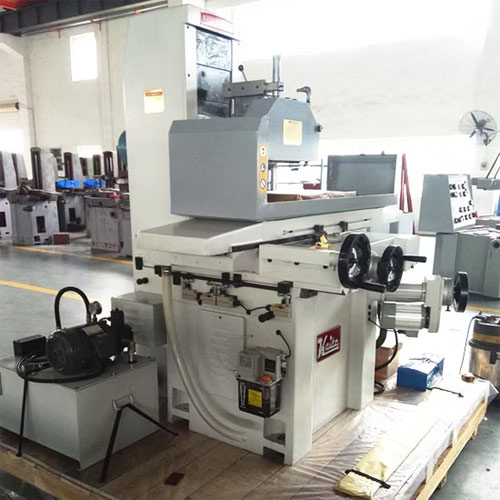
In the world of modern manufacturing, achieving a perfectly flat and smooth finish on metal parts is essential. This is where the Surface Grinding Machine plays a vital role. Whether you are a beginner learning about machining or an experienced engineer looking for precision, understanding this machine is the first step toward high-quality production. It is one of the most common grinding operations used to remove small amounts of material from a workpiece to create a refined surface.
A Surface Grinding Machine uses a rotating abrasive wheel to shave off imperfections from a metal surface. By moving the workpiece back and forth under the high-speed wheel, the machine ensures that the final product is accurate to within very tight tolerances. Today, industries ranging from automotive to aerospace rely on this technology to ensure their components fit together perfectly. If you are looking for a Surface Grinding Machine Manufacturer, it is important to understand how these machines function to make the best choice for your workshop.
What Is a Surface Grinding Machine
A Surface Grinding Machine is a precision machine tool used to produce a smooth, flat finish on flat surfaces. It is a finishing process that uses a rotating abrasive wheel to smooth the metal surface and provide it with a refined look and accurate dimensions.
In the metal finishing and machining industries, this machine is the “final touch” tool. While lathes and milling machines do the heavy lifting by shaping the part, the surface grinder ensures the part is perfectly flat and has the required surface texture.
Key functions of the machine:
Precision Finishing
Dimensional Accuracy:
Surface Preparation
Hard Material Machining
Surface Grinding Machine Working Principle
The Surface Grinding Machine Working Principle is based on the concept of “Abrasive Cutting.” The machine holds a workpiece on a table and brings it into contact with a rapidly spinning grinding wheel.
Step-by-Step Working Process:
- Workpiece Positioning: The metal part (workpiece) is placed on a magnetic chuck. The magnetism is turned on to lock the part firmly in place so it doesn’t move during the high-speed grinding process.
- Grinding Wheel Rotation: The electric motor is started, which spins the grinding wheel at very high speeds. The wheel is made of abrasive particles bonded together.
- Table Movement: The table carrying the workpiece moves in two ways: Longitudinal feed (left to right) and Cross feed (in and out). This ensures the entire surface of the metal is covered.
- Material Removal: As the spinning wheel touches the metal, it acts like thousands of tiny cutting tools. It “shears” off tiny chips of metal, often creating sparks.
Surface Finishing: The operator or the CNC program gradually lowers the wheel (down-feed) after each pass. This continues until the desired thickness and smoothness are achieved.
Main Parts of a Surface Grinding Machine
To understand how this equipment achieves such high Precision Surface Grinding Machine standards, we must look at its components. Each part has a specific role in maintaining stability and accuracy.
| Part | Function |
| Grinding Wheel | The cutting tool made of abrasive grains that removes material from the workpiece. |
| Wheel Guard | A protective cover around the wheel to ensure operator safety and contain sparks/coolant. |
| Magnetic Chuck | A powerful magnet that holds the metal workpiece securely on the table. |
| Table | The platform that moves the workpiece back and forth under the grinding wheel. |
| Column | The vertical structure that supports the wheel head and allows it to move up and down. |
| Cross Feed Mechanism | Moves the table in and out to ensure the wheel grinds the entire width of the part. |
| Coolant System | Sprays liquid on the contact point to prevent the metal from overheating and warping. |
| Base | The heavy cast-iron bottom of the machine that absorbs vibrations for better accuracy. |
Types of Surface Grinding Machines
Not all grinding tasks are the same. Depending on the shape of the part and the volume of production, a Surface Grinding Machine Manufacturer may offer different configurations:
- Horizontal Spindle Reciprocating Table: This is the most common type. The wheel is horizontal, and the table moves left and right. It is best for long, flat rectangular parts.
- Vertical Spindle Rotary Table: The wheel stands vertically, and the table spins like a record player. This is used for grinding multiple small parts at once or very large circular plates.
- Horizontal Spindle Rotary Table: A combination where the wheel is horizontal, but the table rotates. This is excellent for high-precision circular finishes.
CNC Surface Grinding Machine: These are computer-controlled machines. They provide the highest level of automation and are used for complex shapes and mass production
Surface Grinding Machine Applications
The Surface Grinding Machine Uses span across almost every sector of manufacturing. If a part needs to be flat, it likely goes through a surface grinder.
- Automotive Industry: Used for grinding engine blocks, cylinder heads, and piston rings to ensure airtight seals.
- Tool and Die Manufacturing: Critical for making molds and dies that require extremely smooth surfaces to produce plastic or metal parts.
- Aerospace Engineering: Used for turbine blades and structural components where even a microscopic error can cause failure.
- Metal Fabrication: General workshops use them to clean up weldments or flatten metal plates for construction.
- Machine Repair Workshops: Used to “re-surface” worn-out parts to make them look and function like new.
Advantages of Surface Grinding Machine
Why do engineers prefer this machine over others? Here are the primary benefits:
- High Precision: It can achieve tolerances as small as 0.0001 inches.
- Smooth Surface Finish: It produces a “mirror-like” finish on metals.
- Grinds Hard Materials: It can easily handle hardened steel, carbides, and ceramics that other machines cannot cut.
- Ease of Use: Basic models are easy to operate, while CNC models offer “set and forget” automation.
Versatility: It can be used for both mass production and one-off custom repairs.
Tips to Choose the Right Surface Grinding Machine
Buying a machine is a big investment. Whether you are looking for a Surface Grinding Machine Manufacturer in India or elsewhere, keep these tips in mind:
- Workpiece Size: Always choose a machine with a table size slightly larger than your biggest project.
- Spindle Power: If you plan to grind very hard metals, you need a high-horsepower motor.
- Accuracy Requirements: For general repair, a manual machine is fine. For aerospace or medical work, go for a Precision Surface Grinding Machine with CNC controls.
- Coolant Capacity: Grinding generates a lot of heat. Ensure the machine has a robust coolant tank and pump system.
- Brand Reputation: Check reviews and the manufacturer’s history of after-sales service and spare parts availability.
Industries That Use Surface Grinding Machines
Beyond the specific applications, entire industrial sectors rely on the Surface Grinding Machine.
Defense & Military
Medical Equipment
Electronics
Energy
Surface Grinding Machine Manufacturer in India
India has emerged as a global hub for machine tool manufacturing. A Surface Grinding Machine Manufacturer in India often provides high-quality machines at a much more competitive price compared to European or American counterparts.
Why Choose Indian Manufacturers?
- Robust Engineering: Most Indian machines use heavy-duty cast iron bases, which provide excellent vibration dampening.
- Cost-Effective: You get high-end features like hydraulic feeds and digital readouts (DRO) at affordable rates.
- Customization: Many manufacturers in industrial hubs like Rajkot, Ahmedabad, and Ludhiana offer custom table sizes and spindle speeds to suit specific industrial needs.
- Export Quality: Machines made in India are now exported worldwide, meeting international safety and precision standards.
Surface Grinding Machine vs Other Grinding Machines
| Machine Type | Use | Precision Level | Industry |
| Surface Grinding Machine | Grinding flat surfaces | Very High | Tool & Die, Automotive |
| Cylindrical Grinding Machine | Grinding outside of rods/tubes | High | Shaft Manufacturing |
| Centerless Grinding Machine | High-volume small parts | High | Fasteners, Bearings |
| Bench Grinder | Sharpening tools manually | Low | General Workshops |
FAQ
It is primarily used to create a flat and smooth finish on metal workpieces. It helps in achieving precise thickness and a high-quality surface texture required for mechanical parts to function correctly.
It works by holding a workpiece on a magnetic chuck and moving it under a rapidly rotating abrasive wheel. The wheel removes tiny amounts of material until the surface is flat and smooth.
Most commonly, it is used for ferrous metals like steel and cast iron because they stick to the magnetic chuck. However, non-ferrous metals, plastics, and ceramics can also be ground using special clamps or vacuum chucks.
Industries such as automotive (engine parts), aerospace (turbine components), medical (surgical tools), and tool and die (molds) heavily rely on these machines.
The core parts include the Grinding Wheel, Magnetic Chuck (to hold the part), Table (to move the part), Column, and the Coolant System (to prevent overheating).
Consider the size of your parts, the level of precision you need, whether you want manual or CNC control, and the reputation of the Surface Grinding Machine Manufacturer.
Conclusion
The Surface Grinding Machine remains a cornerstone of modern manufacturing. Without its ability to provide extreme precision and mirror like finishes, many of the machines we use today from car engines to airplanes simply would not work. As technology continues to evolve, these machines are becoming faster, smarter, and more accurate. Whether you are a buyer searching for a trusted Surface Grinding Machine Manufacturer in India or a student exploring engineering fundamentals, understanding the working principle and industrial applications of this equipment is essential for long term success in the manufacturing industry.