Choosing a Surface Grinding Machine for Aluminium Cylinder Heads
A surface grinding machine for aluminium cylinder head resurfacing must suit the metal, the head size and the gasket finish. Buying by table length alone can leave a workshop with poor clamping or the wrong tool. Start with the heads you repair, then ask the supplier to prove the proposed setup on a sample job.
Aluminium can stick to unsuitable abrasives. A head may look smooth while still failing a flatness check. The right purchase includes suitable tooling, firm support and a clear way to measure the result before the part goes back into an engine.
This guide helps engine repair shops compare grinding and milling, check machine capacity and request a complete quotation. It also explains what to inspect before cutting, so a new machine supports sound repair decisions rather than guesswork.
Check Whether the Aluminium Cylinder Head Can Be Resurfaced
A customer brings in an overheated head and asks for a quick skim. Before discussing the cut, check whether that head can be repaired within the engine maker’s rules. A machine cannot make every damaged casting fit for use.
Record the engine model, head number and any known repair history. Clean the part using an approved method so deposits do not hide damage. Check its condition and arrange crack or pressure testing where the repair procedure calls for it.
Next, find the permitted repair method, minimum head height and machining allowance in the correct engine repair information. Measure the head using the stated reference points. Do not keep removing metal just to make every pit disappear.
Ask these questions before accepting the work:
- Does the engine maker allow this head to be resurfaced?
- Has the head already been machined?
- Can the required surface be restored within the repair limits?
- Does damage elsewhere make resurfacing unsuitable?
This first check also helps buyers choose a machine. Your supplier needs to know the real work you accept, including unusual castings and heads with hard inserts.
Grinding or Milling for Aluminium Cylinder Head Resurfacing
The name on a machine does not tell you which tool should touch an aluminium head. Some cylinder head resurfacing machines support both grinding and milling. Each method needs a suitable setup.
Grinding removes material with an abrasive wheel or segments. Milling uses cutting edges. Dedicated aluminium cutting tools, including suitable PCD tooling, are used on some head resurfacers. PCD means polycrystalline diamond. Its availability must be confirmed for the machine being quoted.
| Method | What the buyer should check | Evidence to request |
|---|---|---|
| Abrasive grinding | Abrasive suitability for the exact head material | Approved wheel specification and sample result |
| Milling with suitable tooling | Spindle, tool holder and insert compatibility | Trial on a representative aluminium head |
| Machining heads with hard inserts | Tool choice for all materials in the cutting path | Written process advice for that head type |
Do not assume the tool used for a cast iron head suits aluminium. Ask the machine supplier to name the recommended tool and explain its limits. Speed, feed and any coolant requirement should follow that approved combination.
Surface Grinding Machine Capacity Means More Than Table Size
A long table is useful, but it is only one part of usable capacity. The tool must reach the full gasket face while the head remains supported and clear of clamps.
Measure your largest regular head, then include the fixture around it. Check travel, working width, tool clearance and the permitted workpiece weight. Leave enough room to load the head without an awkward lift.
Height needs special attention. Supports and fixtures raise the job above the table. They use some of the space between the table and the machining head. Published wheel to table distance does not automatically equal the tallest head you can machine.
Prepare a simple job list with each head’s length, width, height and weight. Add clear photos. Include the engine heads that make up most of your work, plus any larger jobs you genuinely plan to accept. This gives a surface grinding machine supplier a useful basis for selection.
Workholding for an Aluminium Cylinder Head Grinding Machine
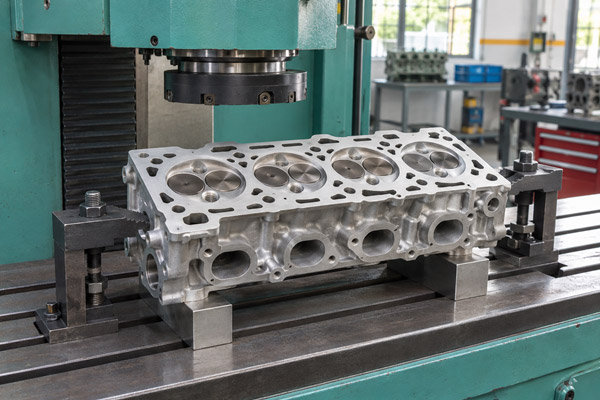
An ordinary magnetic chuck cannot hold an aluminium cylinder head directly. The machine needs a suitable mechanical fixture, clamps and supports.
Good workholding keeps the head stable without bending it. A thin or uneven casting can move under poor clamping. Cutting it in that condition may produce a face that changes when the clamps are released.
Ask the supplier to show how the head is supported, aligned and secured. Clamps must stay outside the tool path. Supports should suit the casting and the machine’s approved method.
Watch the full setup during a demonstration. Can an operator reach the fixing points? Is loading practical? Can the same head be positioned again without a long struggle? These details matter when several different heads arrive in one day.
Include the fixture and suitable supports in the purchase discussion. A bare machine price tells you little about how ready the workshop will be to start work.
Cylinder Head Surface Finish Must Match the Gasket
A bright surface is easy to admire. It does not prove that a cylinder head is ready for assembly. Three checks answer different questions.
| Check | What it tells you | Basis for acceptance |
|---|---|---|
| Flatness | Whether the face is within the allowed shape limit | Correct engine repair specification |
| Surface roughness | Whether the small surface marks suit the gasket | Applicable engine and gasket requirements |
| Remaining head height | Whether enough material remains after machining | Engine maker’s stated measurement and limit |
There is no single roughness value for every aluminium head and gasket. Use the requirements for the exact engine and replacement gasket. If the instructions appear to conflict, resolve that before cutting.
Ra is a common measure of surface roughness. Record its unit as well as its value. Micrometres and microinches are different units, so a bare number can cause confusion. Where a specification requires other surface measures, check those too.
For a buying trial, agree on how finish will be measured. A suitable profilometer can provide a recorded reading. Keep the inspection method consistent so you can compare results fairly.
Choose Aluminium Resurfacing Tooling Before Comparing Price
Aluminium may build up on an unsuitable abrasive and spoil its cutting action. A poor result can come from the tool choice, rather than a lack of motor power.
For a milling setup, ask which cutter and insert are proposed for your head material. For grinding, ask for the approved abrasive specification and care instructions. Heads containing hard inserts or prechambers need their own review.
Request the tool’s replacement code and a current consumable quotation. Check whether replacement items are standard purchases or special orders. Ask who will help if the supplier changes a tool specification later.
Do not judge tooling cost by the first purchase alone. Ask the supplier to explain expected wear signs and the conditions that affect tool life. A useful answer should relate to your work, rather than promise a fixed number of heads for every application.
Common Aluminium Resurfacing Problems and What to Ask
When a trial produces a poor face, pause and find the cause. Taking another cut without understanding the problem may waste the available repair allowance.
- Smearing or material buildup calls for a review of tool suitability and cutting conditions.
- Repeated chatter marks call for checks of support, clamping, tool condition and machine condition.
- A face that changes after unclamping calls for a review of fixture forces and the inspection method.
- Uneven results between jobs call for checks of setup, tool wear and operator practice.
These signs guide an investigation. They do not identify one certain fault on their own. Ask the supplier to explain the finding and show the correction during the trial.
A machine demonstration is most useful when you see how a problem is found and corrected. A photograph of a polished casting gives much less information about everyday workshop use.
Compare Uttam Grinding Surface Grinding Machine Models
Uttam Grinding lists four SGM Series models on its surface grinding machine page. The published dimensions below can help you begin a size comparison.
| Model | Table size in mm | Maximum wheel to table distance in mm |
|---|---|---|
| SGM 1000 | 990 × 300 | 500 |
| SGM 1100 | 1100 × 300 | 530 |
| SGM 1200 | 1200 × 330 | 550 |
| SGM 1500 | 1500 × 350 | 600 |
These are table and clearance dimensions, not a promise that every head within them can be machined. Confirm usable travel, fixture height, tool reach and job capacity for your application.
The product page also lists milling capability. Ask which aluminium tooling, fixture and process are included in the offered configuration. Written confirmation is more useful than assuming every accessory shown or discussed comes as standard.
Request a Cylinder Head Resurfacing Machine Trial
Bring a representative head and its repair requirements to the demonstration. Choose a casting similar to the jobs your workshop handles most often. Confirm that it is suitable for the proposed trial before machining.
Agree on the acceptance checks in advance. Record the starting condition, setup method, selected tool and the result. Include final flatness, required surface finish and remaining head height where applicable.
Watch loading, alignment, clamping and inspection as well as cutting. These tasks form part of the working cycle. A quick cutting pass can still mean a slow job if setup is difficult.
Ask to see the final inspection with the head released from its machining clamps and supported as required by the measurement method. Keep the trial report with the quotation. It provides a shared record of what the proposed machine and setup demonstrated.
Surface Grinding Machine Price and Quotation Checklist
Compare quotations for the same working package. A lower machine price may leave essential fixtures, tools or installation work outside the order.
Ask each surface grinding machine manufacturer to state:
- Exact model, capacity and electrical requirements
- Aluminium machining method and supplied tooling
- Fixtures, supports and clamps included
- Inspection equipment included or required separately
- Delivery, unloading and installation responsibilities
- Operator training and acceptance trial scope
- Warranty terms, exclusions and service arrangements
- Taxes, payment terms and quotation validity
Also ask about replacement inserts, abrasives and other routine costs. Keep optional items separate from the standard supply so the comparison remains clear.
Use Uttam Grinding’s surface grinding machine price guide for the broader cost discussion. Request a current written quotation for your actual aluminium head application before placing an order.
Choosing a Surface Grinding Machine Manufacturer in India
Local access can make a factory demonstration and service discussion easier. Uttam Grinding is based in Rakhial, Ahmedabad, and lists the SGM range for engine rebuilding applications.
When comparing a surface grinding machine manufacturer in India, ask who will support your workshop after delivery. Confirm how faults are reported, how remote help works and when a site visit is available. Get the agreed installation and training scope in writing.
Buyers in Ahmedabad, elsewhere in Gujarat or across India should send the same clear job details. Your location helps plan delivery and support. Your head dimensions, materials and finish requirements determine whether the offered machine suits the work.
Conclusion
Choose a surface grinding machine for aluminium cylinder head resurfacing around the whole repair process. Confirm repair limits first, then review tooling, workholding, usable capacity and inspection.
Before buying, ask for a sample trial and a complete quotation. Share your head details through Uttam Grinding’s contact page and request confirmation of the proposed aluminium setup. A measured trial gives you a firmer basis for a purchase than table size or appearance alone.
Frequently Asked Questions
Yes, when its configuration and tooling suit the exact head. Some machines use a dedicated milling setup for aluminium. Before buying, ask the supplier to confirm the process and demonstrate the required finish on a representative casting.
Base the choice on your head materials and required results. Ask for a trial with the proposed tool. Include any heads with hard inserts in the discussion, as one tool choice may not suit every cutting path.
An ordinary magnetic chuck cannot hold aluminium directly. Request a suitable mechanical fixture with proper supports and clamps. Confirm its cost, compatibility and setup method before accepting the machine quotation.
Give the supplier the finish requirements for the engine and gasket you use. State the measurement units and inspection method. Avoid accepting a universal Ra claim as proof that the machine suits every head your workshop repairs.
The engine repair limit determines permitted removal, even if the machine could cut more. Check the head’s current measurements and repair history. Ask the supplier to demonstrate controlled removal within the allowance for the trial part.
Send Uttam Grinding your regular head sizes, weights and fixture needs. Compare usable travel and working clearance as well as table dimensions. Ask for a model recommendation tied to those jobs and confirmed through a suitable trial.
Request the machine, aluminium tooling, fixture, supports and agreed training scope. Include delivery, installation, acceptance checks, warranty and taxes. Ask which items are optional, then compare suppliers using the same complete package.