Surface Grinding Machines in Modern Manufacturing
In modern manufacturing, precision and surface quality are critical factors that determine the performance, reliability, and longevity of components. Surface grinding machines have become indispensable in workshops, factories, and industrial production lines, offering high accuracy, smooth finishes, and consistent results.
From automotive parts to aerospace components, these machines are redefining the standards of precision engineering. In this blog, we explore how surface grinding machines are revolutionizing manufacturing, their types, advantages, applications, and best practices for maintenance.
What Is a Surface Grinding Machine?
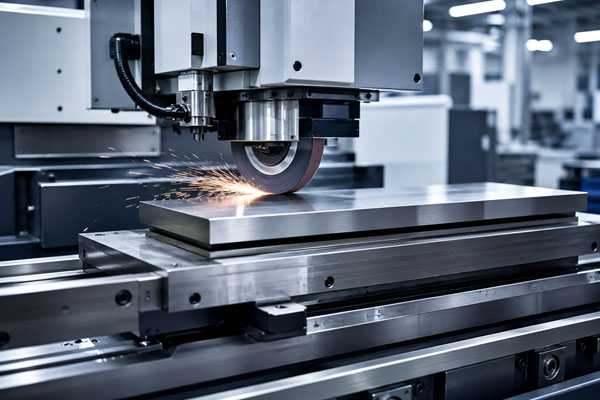
A surface grinding machine is a precision tool used to produce a smooth and flat finish on metallic and non-metallic surfaces. It works by removing tiny amounts of material using a rotating abrasive wheel while maintaining strict dimensional tolerances.
Key Components:
- Grinding Wheel: Abrasive disc that performs the material removal.
- Work Table: Holds the workpiece in position; may move manually or via CNC controls.
- Magnetic Chuck (Optional): For holding ferromagnetic workpieces securely.
- Coolant System: Reduces heat and prevents surface damage during grinding.
Advantages of Surface Grinding Machines
Applications of Surface Grinding Machines
Automotive Industry
- Grinding engine blocks, cylinder heads, and transmission parts for flatness and proper fit.
Aerospace & Aviation
- Precision surfaces for landing gear components, turbine blades, and fuselage parts.
Tool and Die Manufacturing
- Finishing dies, molds, and cutting tools with exact dimensions.
General Manufacturing
- Finishing metal sheets, plates, and custom parts for machinery, industrial equipment, and consumer products.
Electronics & Precision Instruments
- Grinding heat sinks, metallic casings, and components requiring strict tolerances.
Types of Surface Grinding Machines
| Type | Features | Typical Use |
|---|---|---|
| Manual Surface Grinder | Hand-controlled table movement | Small workshops, prototype parts |
| CNC Surface Grinder | Computer-controlled precision, automated operation | Mass production, high-precision components |
| Horizontal Spindle Grinder | Wheel mounted horizontally, flat grinding | Large blocks, die manufacturing |
| Vertical Spindle Grinder | Wheel mounted vertically | Thin workpieces, precision dies |
| Plunge Grinder | Grinding wheel moves straight down | Step surfaces, slots, grooves |
How Surface Grinding Machines Work
- Mounting the Workpiece: Secured on a magnetic or mechanical chuck.
- Wheel Selection: Choosing the correct abrasive wheel for the material.
- Material Removal: Wheel rotates and moves across the workpiece, removing fine layers.
- Cooling: Coolant prevents overheating, warping, or surface damage.
- Measurement & Verification: Micrometer or CNC readouts ensure tolerances are met.
Modern CNC grinders combine automatic wheel dressing, digital controls, and programmable passes to maximize precision and efficiency.
Maintenance and Best Practices
- Wheel Dressing: Regularly dress the grinding wheel to maintain sharpness and surface quality.
- Lubrication and Coolant: Check coolant levels and ensure proper flow to prevent overheating.
- Clean Work Area: Remove metal dust and debris to prevent contamination.
- Periodic Calibration: Verify table alignment, spindle accuracy, and magnetic chuck performance.
- Proper Operator Training: Skilled operators improve efficiency, reduce errors, and prolong machine life.
Advantages Over Traditional Grinding Methods
| Feature | Surface Grinding Machine | Manual File or Sanding |
|---|---|---|
| Precision | Micron-level | Low, inconsistent |
| Speed | High, repeatable | Slow |
| Surface Finish | Smooth, uniform | Rough, variable |
| Efficiency | Automated, less labour | Manual, time-consuming |
| Versatility | Multiple materials and shapes | Limited |
Observation: Surface grinding machines outperform traditional methods in precision, efficiency, and repeatability.
FAQs About Surface Grinding Machines
Yes, with the correct abrasive wheel and spindle speed, they can grind steel, stainless steel, and hardened alloys.
Modern CNC surface grinders can achieve tolerances as low as ±0.002 mm.
Manual or semi-automatic grinders are ideal for small-scale workshops or prototype work.
Yes, plunge and vertical spindle grinders can handle steps, grooves, and slots.
Depends on usage; generally after 8–10 hours of cutting or when finish quality decreases.
Conclusion
Surface grinding machines have redefined precision manufacturing by delivering flatness, smooth finishes, and micron-level accuracy. From automotive and aerospace to tool-making and electronics, these machines are essential for high-quality, reliable, and efficient production.
By combining automation, precision engineering, and flexible operation, modern surface grinders allow manufacturers to meet stringent quality standards, increase productivity, and reduce waste, making them a cornerstone of contemporary industrial manufacturing