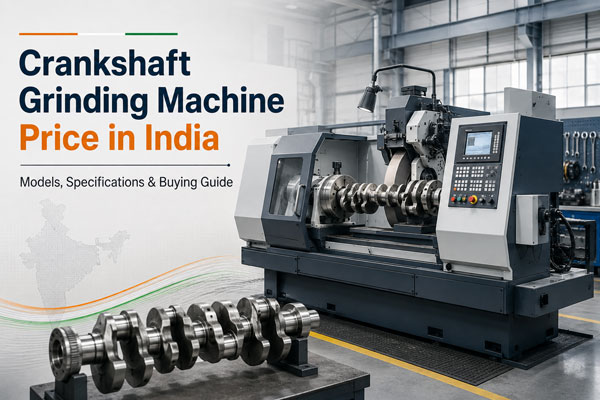
Crankshaft Grinding Machine Price in India
Investing in heavy-duty workshop equipment requires accurate technical research, and finding the latest crankshaft grinding machine price in India is the first step for many engine rebuilders. Whether you are upgrading a diesel engine repair business or starting a new automotive machine shop, understanding the real cost of this equipment prevents expensive mistakes.
The final price depends on maximum distance between centres, wheel head motor capacity, machine bed construction, automation level, and included accessories. Delivery, installation, and after-sales support also change the final delivered cost. This comprehensive guide provides accurate price ranges, detailed Uttam Grinding model specifications, and practical advice to help buyers select the perfect machine. Explore the sections below to make a confident purchasing decision.
What Is a Crankshaft Grinding Machine?
A crankshaft grinding machine is a specialised machine tool used to repair worn engine parts. Over time, the main journals and crankpins on an engine’s crankshaft become oval, scratched, or tapered due to friction. To fix this, an automotive crankshaft grinder removes a very thin layer of metal from these surfaces.
Grinding restores the perfect roundness and smooth surface finish of the journals. This allows new engine bearings to fit correctly, ensuring the engine runs smoothly with proper oil pressure. This machine is essential for diesel engine repair workshops, engine-reconditioning centres, and industrial engine rebuilders.
Quick Answer:
A crankshaft grinding machine restores worn engine crankshafts by grinding the main journals and crankpins. This makes the surfaces perfectly round and smooth so new bearings can be installed during engine rebuilding.
Crankshaft Grinding Machine Price in India
Finding an exact crankshaft grinding machine cost online can be difficult because these are heavy industrial tools built to order. Based on current market data, the crankshaft grinding machine price in India varies widely depending on the size and capacity of the machine.
Below is a table showing the indicative market price range for different machine capacities.
| Machine Category | Typical Application | Automation Level | Indicative Price Range | Main Price Factors | Suitable Buyer |
|---|---|---|---|---|---|
| Light Duty (Up to 1000 mm) | Two-wheelers, small cars, light engines | Manual / Semi-Automatic | ₹6,00,000 – ₹9,50,000 | Centre distance, basic motors | Small automotive machine shops |
| Medium Duty (1100 mm to 1600 mm) | Tractors, commercial vehicles, medium diesels | Semi-Automatic | ₹9,50,000 – ₹14,00,000 | Swing capacity, hydraulic systems | Standard engine rebuilding workshops |
| Heavy Duty (2000 mm and above) | Earthmovers, marine engines, heavy trucks | Semi-Automatic / CNC | ₹15,00,000 – ₹25,00,000+ | Heavy bed weight, large chucks, large motors | Industrial engine rebuilders |
Note:
The prices above are indicative ranges gathered from current Indian B2B marketplace listings. They do not include 18% GST, transport, unloading, foundation work, installation, special accessories, or customisation. Final pricing is always quotation-based.
Because a heavy duty crankshaft grinding machine requires specific features for your workshop, reliable manufacturers do not list fixed “add to cart” prices. Instead, they provide a detailed quotation after understanding your exact needs.
Uttam Grinding Crankshaft Grinding Machine Models
Uttam Grinding manufactures robust and highly accurate machines designed for easy operation and rigid strength. Below are the exact current specifications for the four primary crankshaft grinding machine models available.
| Specification | CSG-850 (32″) | CSG-1200 (48″) | CSG-1600 (64″) | CSG-2100 (90″) |
|---|---|---|---|---|
| Max Distance Between Center | 810 mm | 1200 mm | 1600 mm | 2100 mm |
| Max Distance Between Chacks | 810 mm | 1200 mm | 1600 mm | 2100 mm |
| Max Offset Center | 75 mm | 100 mm | 125 mm | 175 mm |
| Max Grinding Wheel Diameter | 600 mm | 660 mm | 710 mm | 810 mm |
| Wheel Head Motor | 2.0 HP | 5.0 HP | 5.0 HP | 7.5 HP |
| Work Head Motor | 0.5 HP | 0.5 HP | 0.5 HP | 1.5 HP |
| Hydraulic Motor | 0.5 HP | 0.5 HP | 0.75 HP | 1.0 HP |
| Coolant Pump Motor | 0.8 HP | 0.08 HP | 0.08 HP | 0.08 HP |
| Approximate Weight | 1900 Kg | 2800 Kg | 3800 Kg | 7600 Kg |
Factors Affecting Crankshaft Grinding Machine Cost
The crankshaft grinder machine price changes based on several technical and commercial factors. Understanding these helps you compare quotations fairly.
- Maximum Crankshaft Length:
Longer machines require a larger, heavier cast-iron bed to prevent bending. This increases metal costs significantly. - Distance Between Centres:
This dictates the maximum length of the crankshaft the machine can hold. - Maximum Offset:
A larger offset capacity requires heavier chucks and stronger headstocks, raising the price. - Grinding-Wheel Size:
Machines supporting larger diameter wheels need stronger wheel-head motors (e.g., 7.5 HP instead of 2.0 HP). - Machine-Bed Construction:
High-quality, stress-relieved heavy metal beds reduce vibration but cost more to manufacture. - Hydraulic System:
Fast hydraulic movement for the wheel head requires reliable pumps and motors, adding to the cost. - Measuring System:
Including standard dial indicators or advanced sizing gauges impacts the price. - Accessories:
Standard tools like a centering stand, steady rest, and radius dresser are included, but extra weights or special chucks cost more. - Taxes and Transport:
18% GST, wooden packing, transit insurance, and heavy-truck transport are added to the factory price.
| Price Factor | Impact on Machine Cost | Impact on Machine Performance |
|---|---|---|
| Heavy Machine Bed | High increase | Stops vibration, improves journal surface finish |
| Higher Motor Power | Medium increase | Allows faster cutting without slowing down |
| Longer Centre Distance | High increase | Allows grinding of larger industrial engine parts |
| Hydraulic Automation | Medium increase | Speeds up the grinding process, reduces operator fatigue |
Manual vs Semi Automatic vs CNC Crankshaft Grinding Machine Price
When choosing an automotive crankshaft grinder, you must decide on the level of automation. Each type serves a different workshop need.
| Feature | Manual Machine | Semi Automatic Machine | CNC Machine |
|---|---|---|---|
| Purchase Cost | Lowest | Medium | Very High |
| Operator Skill | High skill required | Medium skill required | Basic operation, high programming skill |
| Production Speed | Slow | Moderate to Fast | Very Fast |
| Repeatability | Depends on operator | Good | Excellent |
| Setup Time | Longer | Moderate | Fast (once programmed) |
| Maintenance | Easy and cheap | Moderate | Expensive, requires specialists |
| Best Application | Low-volume custom rebuilding | Medium to high-volume engine rebuilding | Mass manufacturing, OEM production |
| Suitable Workshop | Small repair shops | Professional automotive machine shops | Industrial factories |
| Limitations | Slow production, operator fatigue | Requires some manual measuring | Too expensive for standard repair shops |
Recommended Choice:
Most engine-rebuilding workshops prefer a semi automatic crankshaft grinding machine. It provides a perfect balance of affordable price, fast hydraulic wheel-head movement, and reliable accuracy without the massive cost of CNC technology.
Important Crankshaft Grinding Machine Specifications
When comparing quotations from any crankshaft grinding machine supplier, you must check the technical specifications carefully.
| Specification | Why It Matters | Buyer Question |
|---|---|---|
| Distance Between Centres | Determines the longest crankshaft you can mount. | Can this machine fit a 6-cylinder truck engine? |
| Maximum Offset | Controls how far off-centre you can push the crankpins. | Is the offset large enough for tractor engine strokes? |
| Grinding-Wheel Diameter | Larger wheels last longer and cut cooler. | How often will I need to change the grinding wheel? |
| Spindle Stability | Taper roller bearings stop the wheel from vibrating. | Does the headstock use high-quality bearings? |
| Motor Power | Weak motors stall when grinding hard metal. | Is a 5.0 HP wheel-head motor sufficient for my work? |
| Coolant System | Poor coolant flow causes grinding burn on the journal. | Does the pump provide high-pressure coolant flow? |
| Machine Weight | Heavy machines (e.g., 3800 Kg) absorb cutting vibrations. | Will this machine shake during heavy grinding? |
Manufacturer vs Dealer Which Buying Option Is Better?
You can buy a machine from a local dealer or directly from a crankshaft grinding machine manufacturer in India.
| Buying Factor | Direct Manufacturer | Local Dealer |
|---|---|---|
| Price Transparency | High (Factory direct price) | Medium (Dealer margin added) |
| Technical Knowledge | Excellent (They built the machine) | Average |
| Customisation | Possible (Motor sizes, electricals) | Usually not possible |
| Spare Parts | Original parts guaranteed | May source aftermarket parts |
| Long-Term Service | Factory engineers available | Depends on dealer capability |
Buying Tip:
Purchasing directly from a manufacturer like Uttam Grinding often provides better after-sales support, exact spare parts availability, and clearer technical guidance.
Conclusion
Understanding the crankshaft grinding machine price in India involves more than just looking at a single number. The cost changes based on the maximum distance between centres, motor power, heavy cast-iron construction, and automation levels.
Before comparing quotations, calculate your workshop’s maximum capacity requirements. Remember that the total delivered cost—which includes GST, transport, concrete foundation, and accessories—is more important than the basic listed price. Selecting a machine with strong after-sales support, easy availability of spare parts, and proper operator training guarantees long-term value for your engine-rebuilding business.
For current pricing, exact model selection, and a customised quotation tailored to your workshop, contact Uttam Grinding today.
FAQs
The price typically ranges from ₹6,00,000 for lighter automotive models up to ₹25,00,000 or more for heavy-duty industrial models. The final amount depends heavily on the machine’s capacity, distance between centres, motor power, and automation level. Exact prices are provided via manufacturer quotation.
Select a model based on the longest and heaviest crankshaft you repair. For small cars, an 850 mm centre distance is sufficient. For commercial vehicles, choose a 1200 mm to 1600 mm model. For heavy industrial engines, a 2100 mm machine is required.
The main factors are the length of the machine bed, the maximum distance between centres, maximum offset capacity, grinding wheel diameter, and motor horsepower. Additional costs include GST, heavy-truck transport, installation, and essential measuring accessories.
A semi-automatic grinder is generally better for professional engine rebuilding. It uses fast hydraulic movement for the wheel head, which reduces operator fatigue, improves safety, and speeds up the grinding process compared to a fully manual machine.
Yes. A machine with a large distance between centres (like 1600 mm) can grind both long six-cylinder diesel crankshafts and small two-wheeler crankshafts. However, you must use the correct steady rests and grinding wheels for smaller shafts.
Essential accessories include different sizes of grinding wheels, a wheel balancing stand, centering stand, steady rests, radius and flat dressers, dial indicators, and micrometers. Quality coolant filtration and safety guards are also mandatory for daily operation.
You need space equal to the total length of the machine plus at least one metre of clear space on all sides for the operator to move, load heavy crankshafts using a crane, and perform daily maintenance.
Yes. Heavy-duty grinding machines, which can weigh between 1900 Kg and 7600 Kg, require a specially designed, level concrete foundation. This absorbs vibrations and ensures the machine grinds with perfect accuracy.
Yes, operator training is highly recommended. Grinding a crankshaft correctly requires understanding offsets, wheel dressing, balancing, and precision micrometre measurement. Proper training prevents expensive damage to the machine and the customer’s engine parts.
A new machine offers factory accuracy, a warranty, and guaranteed spare parts. A used machine is cheaper initially but carries a high risk of bed wear, spindle problems, and unexpected downtime. Professional workshops generally prefer new machinery.
To get an accurate quote, provide the manufacturer with the minimum and maximum lengths of the crankshafts you repair, the required offset, your daily job volume, available electrical power, and your factory location for transport calculation.
Usually, factory prices are “ex-works,” meaning transport, crane unloading, transit insurance, and GST are extra. Installation and training by factory engineers may also incur additional travel and accommodation charges. Always ask the manufacturer for a detailed breakdown.